Shutdown Enters Second Week With No Clear Path Out as Capitol Tempers Flare
With the federal government closed for more than a week, a fight over expiring health insurance subsidies has left both parties dug in, even as small groups of lawmakers quietly search for a compromise.
By Amy Swan ·
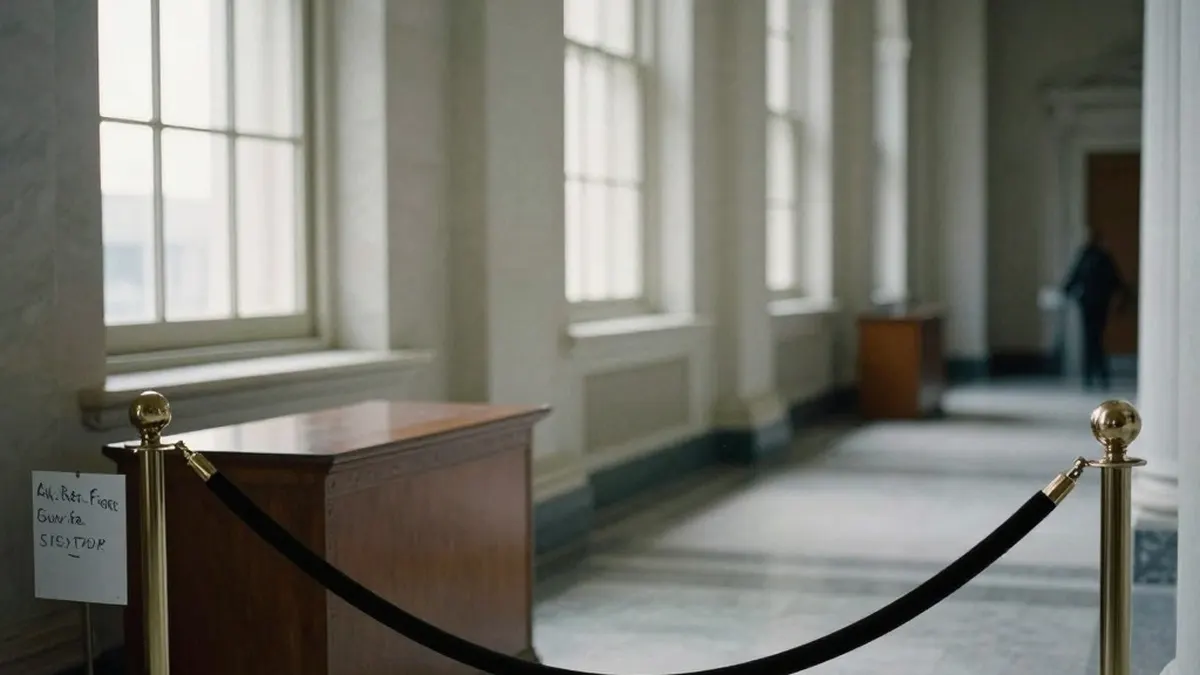
The federal government shutdown stretched into a second week on Wednesday with no visible end in sight, as Capitol tours stayed halted, the House kept its doors closed and the Senate again voted down competing plans to reopen agencies.
Two rival bills, one from Republicans and one from Democrats, failed once more in the Senate. No formal negotiations are taking place publicly, though clusters of Republican and Democratic lawmakers have been meeting privately to look for an exit. The dispute centers on whether to preserve health care subsidies.
The effects are spreading. Military personnel and federal employees are due to miss paychecks, flights are being delayed at airports across the country, and federal programs have been disrupted. President Donald Trump has threatened mass firings of federal workers and has said he may refuse back pay for the rest. Federal employees have often gone without paychecks during past shutdowns, but ending guaranteed back pay would be a sharp break from the norm. The White House budget office, led by Russ Vought, argues the law does not make back pay automatic and that Congress would have to approve it. Union leaders gathered near the Capitol warned Trump against treating workers as "political pawns." "Congress, do your damn job," said Randy Erwin, president of the National Federation of Federal Employees.
Tempers boiled over at the Capitol. Arizona's two Democratic senators stood outside House Speaker Mike Johnson's office demanding that he reopen the House so Rep.-elect Adelita Grijalva can be sworn in. She won a special election last month for the Tucson-area seat and has said she would back releasing files from the Jeffrey Epstein sex trafficking investigations. Johnson, whose Republican majority will shrink once she is seated, declined. Later, Democratic leader Hakeem Jeffries was confronted by New York Republican Rep. Mike Lawler, who pressed him to back a one-year extension of the expiring subsidies. "You shut the government down," Lawler said. "You're embarrassing yourself," Jeffries answered.
At the heart of the standoff are the enhanced federal subsidies that help people buy private insurance through Affordable Care Act exchanges. Congress expanded them during the COVID-19 pandemic, and enrollment rose to a record 24 million people. The enhanced aid expires at the end of the year. Republicans say the issue can be handled in the coming months, while Democrats want it resolved now, as consumers receive notices of higher premiums for the new year.
Some ideas are circulating. Maine Sen. Susan Collins proposed reopening the government now with a "commitment" to discuss health care. South Dakota Sen. Mike Rounds floated a one-year extension of the subsidies followed by a phase-out. Trump has signaled openness to a deal, saying earlier this week that talks were underway before saying hours later that the government must reopen first. Georgia Rep. Marjorie Taylor Greene and Missouri Sen. Josh Hawley have broken with their party, saying something must be done about rising premiums.
Optimism was scarce. "I'm pretty discouraged," Rounds said, adding that he sensed it was "probably past the point of getting anything done." Delaware Democrat Chris Coons said, "I'm an optimist, but wow are we not making much progress." Oklahoma Republican Sen. Markwayne Mullin, who is close to Trump, said, "There's always a group talking."
Both sides believe their internal data supports holding firm. Senate Democrats have been told their health care message is resonating with voters, and a Senate Majority PAC memo urged House Democrats and campaigns to hold the line. A memo from the House Republican campaign arm urged candidates to emphasize the shutdown's economic impact. Johnson is confident enough that he plans to take live caller questions on C-SPAN on Thursday morning, while Senate Democratic leader Chuck Schumer insisted Republicans are "feeling the heat." Each party views the fight as a preview of the 2026 midterm elections.
Source: Los Angeles Daily News